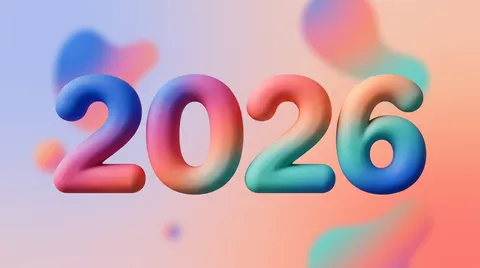
In 2026, almost everything in the creative industry will revolve around one question: When do you let perfection lead, and when do you let imperfection speak? We’ve compared the latest industry analyses with our own designer meetings and distilled the trends that really matter—not just those that have been claimed here and there. With real examples, not just buzzwords, and always with an eye toward your next explainer video.
Trend 1: Gradient Design
When a trend emerges in our internal designer meeting is marked with a red “Mega Trend” stamp, we listen … Soft, multicolored gradients, often Rendered with a grainy rather than smooth texture, defining 2,026 illustrations, event posters, and entire brand identities.
- Versatile: works for everything from illustration to typography.
- Emotional: Gradients appear warmer and more organic than flat surfaces.
- Future-proof: can be combined with grain/texture without conflict. Applications: Title screens, transitions in explainer videos, brand presentations with a strong visual impact.
Author: Videodesign
Trend 2: Distorted Characters, our “Artsy Bold” look
It’s exactly the style we’ve just developed ourselves as a new mood board: flat 2D illustrations, rich blocks of color, oversized body parts, and confident poses. This isn’t just a niche idea, but a trend that has been confirmed multiple times by external sources: comic-style, slightly exaggerated characters are replacing well-behaved, realistic figures.
- Distinctive: a cast of characters with personality, rather than generic stock photos.
- Diverse: Deliberately depicts a variety of people and situations.
- Emotional: Exaggeration conveys personality more quickly than realism. Applications: Explanatory videos with character, brand mascots, social media content with high recognition value.
Author: Videodesign
Trend 3: Artful Craftsmanship Instead of Polished Perfection
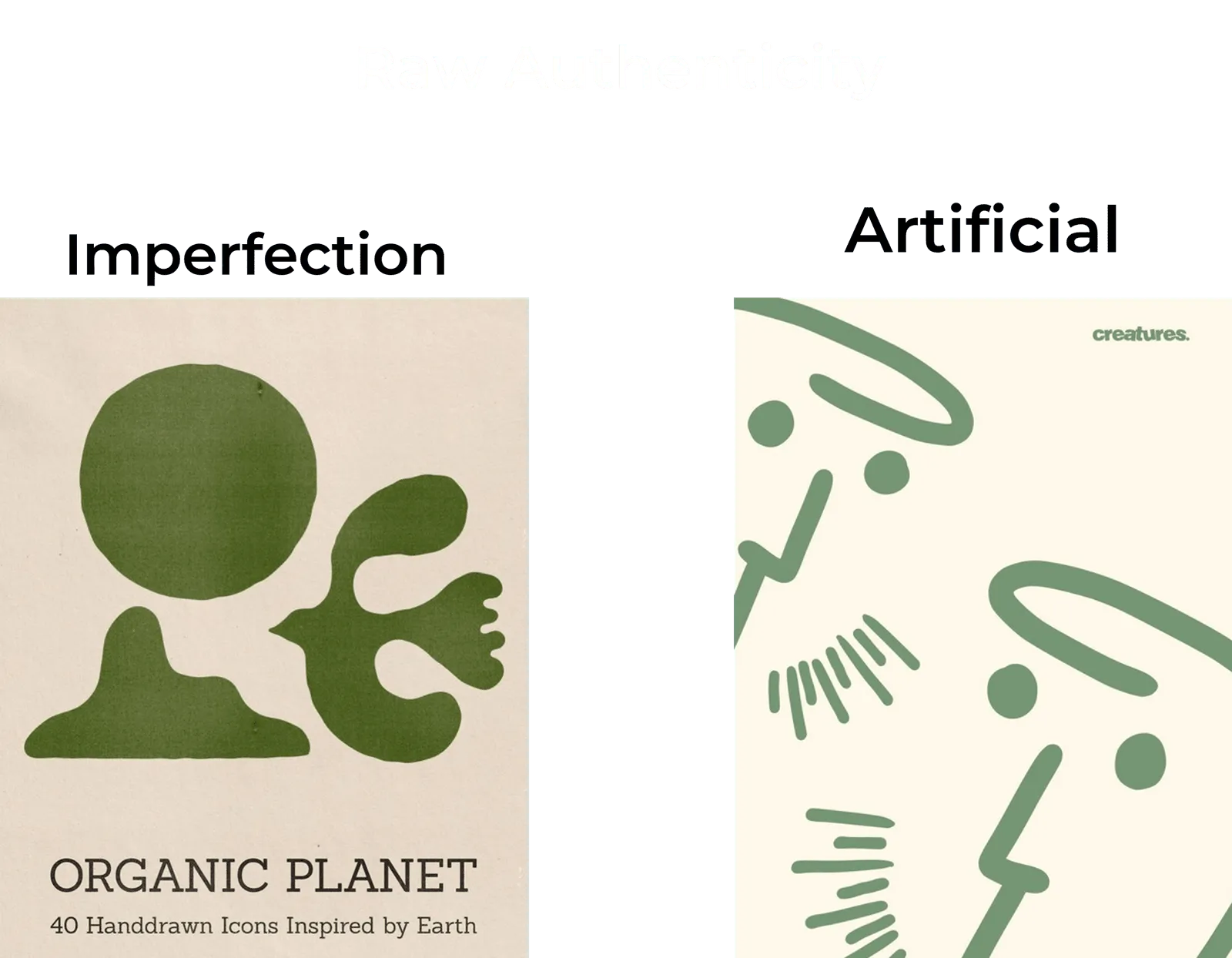
The antithesis of AI perfection: raw, handmade shapes, irregular lines, and visible human touch instead of digital smoothness. Naive, deliberately childlike illustrations and organic, hand-drawn shapes will represent the exact opposite of AI perfection in 2026, and will therefore come across as more personal and memorable.
- Trust: Visible imperfections come across as more honest than a polished finish.
- Differentiation: Deliberately sets itself apart from AI-generated, polished visual worlds.
- Timeless: works regardless of fleeting software trends. Applications: explanatory videos with a personal touch, illustrations designed to convey approachability rather than a glossy look.
Trend 4: AI as a Tool, Not a Replacement
Our design team sums it up with a simple question: Will AI be a “sidekick” or a “supervillain” in 2026? The answer is usually “both, depending on how it’s used.” In 2026, AI will handle the grunt work behind the scenes, while humans retain control over the concept, tone, and direction—and that’s exactly what makes the difference.
- Get to the first draft faster, leaving more time for fine-tuning.
- AI provides raw material and options, not the idea behind it.
- The key point remains: It’s who comes up with the concept, not who renders it. Applications: Faster design phases, multilingual content, experimental visual worlds.
Author: Videodesign – Birdlife
Trend 5: Accessibility Is Becoming a Requirement, Not an Option
By 2026, inclusive design will no longer be a “nice-to-have” but the standard, reinforced by legal requirements such as the Swiss Disability Equality Act. Hard-coded captions, clear contrasts, and well-thought-out audio descriptions must be part of the design from the very beginning, not just an afterthought.
- It truly reaches all target audiences, not just the loud ones.
- It works even on mute, in an open-plan office, or on a train.
- Legally relevant for public agencies and many companies. Applications: Explanatory videos for government agencies and companies; see also our article on accessibility in explanatory videos.
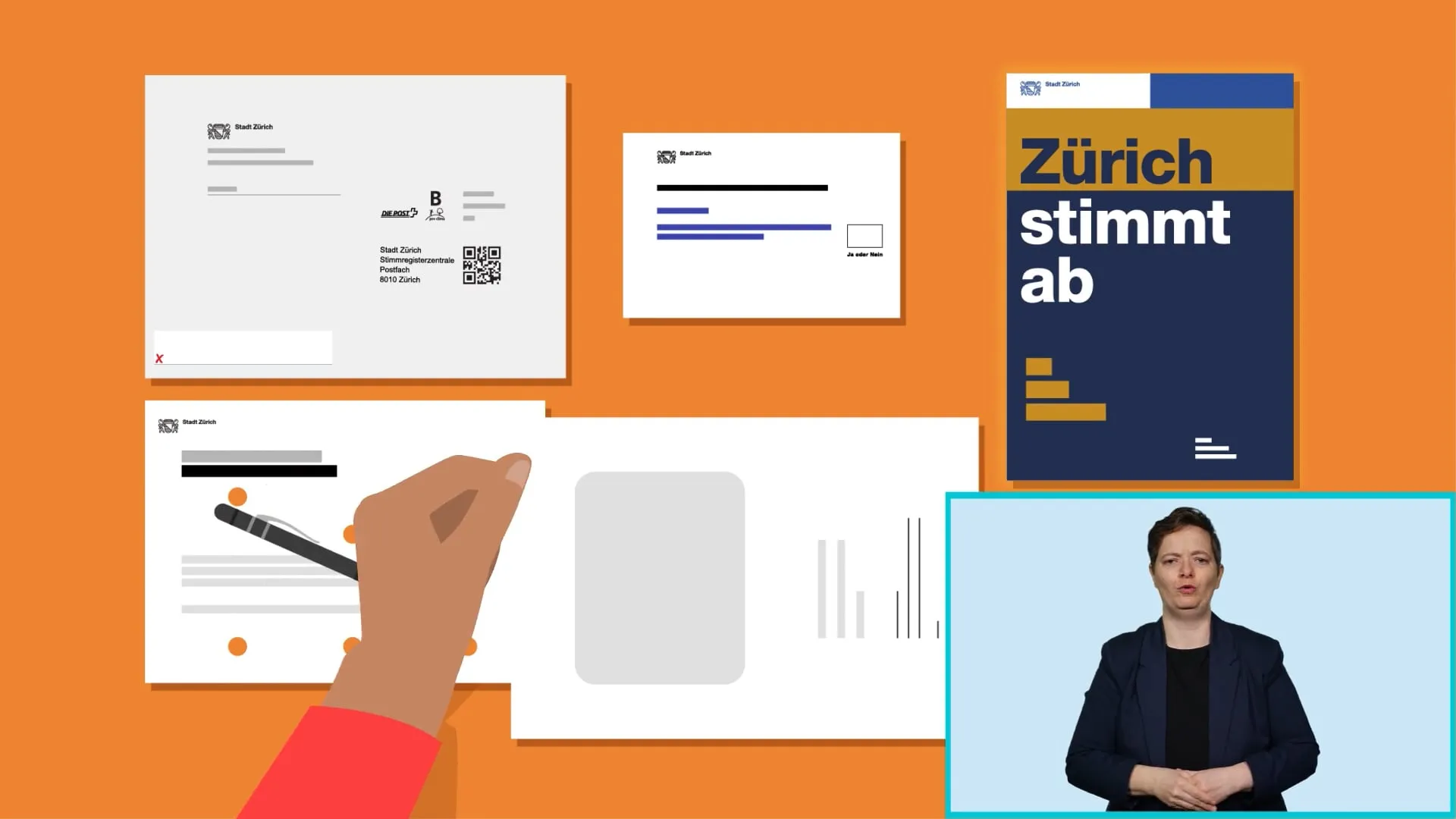
Author: Video Design – Project: City of Zurich
Trend 6: Analog Nostalgia, from Retro-Futurism to Grain
Grainy textures, muted colors, and the whimsical space-age aesthetic of past decades evoke a sense of familiarity that purely digitally generated images cannot achieve. In 2026, retro doesn’t seem old-fashioned, but rather like a deliberate counterpoint to sleek AI perfection.
- Recognition: immediately evokes a sense of time.
- Warm: a muted, textured color palette instead of a cold, digital look.
- Versatile applications: from illustrations to video transitions. Applications: anniversary campaigns, social media teasers, brand stories with historical references.
Conclusion on the Explanatory Videos Trends for 2026
In 2026, success won’t come to those who stubbornly stick to a single style, but to those who consciously decide where perfection wins people over and where imperfection touches them—and blend the two when necessary. That’s exactly our approach: Contact us for a free consultation, and together we’ll find the style that fits your brand.

Arrange a free consultation with our video experts. Together we simplify your communication.