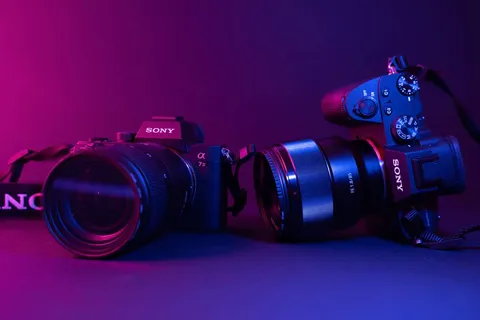
Every minute, users around the world watch several million videos. YouTube, TikTok, Instagram and Facebook play a central role in that. Thanks to their enormous audiences, they are perfect for your video marketing. Although many users still rely on traditional text-based content, the past few years have made one thing clear: video content matters enormously. It speaks to your target group in a very particular way and simply can’t be compared with other kinds of content.
What is video marketing?
At its core, video marketing is the same as any other kind of marketing: it aims to deliver on a company’s advertising and communication goals. The difference from other formats is that you achieve those goals through video. That covers every video format you can use in this field.
One particular advantage is that videos don’t immediately look like classic advertising at first glance. Your viewers don’t feel pushed towards a purchase; they simply enjoy the short clip. Ideally, users watch such clips right to the end. That’s largely because video content stirs emotions. Whether it’s exciting, funny, startling or entertaining, these formats deliver your advertising message subtly and unobtrusively. This is what sets video marketing clearly apart from traditional TV advertising, which viewers find annoying and intrusive.

Since the term video marketing covers a broad field, you can break it down by different criteria. The first categorisation describes how the video is made, or more precisely, whether you produce it as live-action film or as a video animation. After that, you distinguish between different video formats, all of which are ideally suited to your social media marketing.
The 6 types of marketing videos
At the start of every video marketing project, you have to decide what kind of video you want to produce. Below you’ll find an overview of the 6 most common video formats:
Explainer video
The explainer video is one of the most popular formats. It’s also known as a how-to video and shows how something works. You’ll find this kind of video content on company websites, but also on social media. In these explainer videos, companies or customers show how to use a product and how to apply it correctly. You may, however, need to create several videos on a particular topic. After all, it’s easier to search for content by topic and watch these product-specific formats.
Image film
An image film presents your company as a whole: what it stands for, how it works and the people behind it. It gives your brand a face and builds trust before the first contact is even made. You can use it on your website, in presentations, at trade fairs and for employer branding.
Product video
A product video puts a single product in the spotlight and shows its features and benefits at a glance. Prospects understand within seconds what it does and why it’s worth it. Product videos work especially well in online shops, on product pages and in social media ads.
Commercial and trailer
A commercial or trailer has to grab attention fast and leave viewers wanting more. Instead of explaining everything, it relies on emotion, pace and one clear message. It’s how you announce a campaign, a product launch or an event – on TV, in cinemas or as an ad on social media.
Interview
The interview is a popular strategy in video marketing. This format consists of at least two people talking to each other. It’s a great way to gather customer opinions or reviews. At the same time, interviews show real people your customers can relate to.
Recruiting video
Companies looking for new employees have several options for their video marketing. Alongside the image film, targeted recruiting videos are an excellent idea. Here you present an open position and give a first impression of everyday working life. In the broadest sense, it’s a written job advert in video form, only far more engaging.
Trade fair and event film
Within companies, trade fair and event films are a popular way to offer attractive video content. You’ll find this kind of content on social media, on business networks or on the company website. It can either draw attention to an upcoming event or offer a look back afterwards.
Where video marketing is used
You can use video marketing in a targeted way in countless places. What matters is less why video marketing is a good idea and more where you use it. Which platform suits your video content best depends on your target group. Content that lands well on TikTok can feel out of place on other social media channels. Well-thought-out social media marketing is the key to success here. In this context, it can make sense to work with a video marketing agency. These professionals know exactly which format works on which platform.
Alternatively, you can use your video content on your own website. Many companies follow this strategy. Here they present products, explain processes and procedures, or give a quick look at how something is used. You can easily combine this approach with the better-known platforms for your video marketing, such as YouTube or Vimeo.
Which video content you use where depends on the goals you’re pursuing with your video marketing. The following uses are among the most popular areas for your social media marketing.


YouTube
YouTube offers the best search options for video content. That’s why it’s the first port of call for most users when they’re looking for this kind of content. With the right video marketing strategy, YouTube lets you speak to your target group directly.
As the largest social media platform in the world, Facebook gives you a broad audience for your video marketing. Video content now makes up a large share of what’s on the platform. Local businesses in particular choose to extend their social media marketing to Facebook.
Instagram offers you different kinds of formats you can use for your video marketing. Depending on your content, you can focus on Stories, videos, Reels and live videos. While Stories and Reels are only a few seconds long, you can also post video content up to 60 minutes in length.
TikTok
TikTok isn’t just for entertaining distraction; it works for your video marketing too. Because of its younger audience, though, you should rely on an attractive social media marketing strategy.
Snapchat
With video marketing on Snapchat, you reach a younger audience than on other social media platforms. If your aim is to strengthen your brand presence among millennials, this network is exactly right. To succeed here, you should focus on authenticity, closeness and emotion.
LinkedIn is one of the most important business networks in the world. The platform is ideal for successful B2B video campaigns. On this network you’ll find a very career-oriented target group that engages with business topics and social issues.
Like LinkedIn, Xing is a career-oriented social media platform. That makes it particularly suitable for B2B content or recruitment videos. But visitors also enjoy watching image films and explainer videos with a professional context.
Why companies should invest in video marketing
The simplest answer to why video marketing matters in a business context is this: a video is a visual medium that creates emotional closeness to your customers. If a picture already says more than 1000 words, moving images deliver an even higher density of information. You can pack a great deal of content into them without your viewers getting bored.
With social media marketing, you’re focusing on an approach that appeals to most people. Given the choice between a long text and a video, almost everyone picks the video. That’s why companies benefit from being present on the popular social media platforms. Which ones exactly depends, of course, on your existing and potential customers.
One of the reasons video marketing is so important for companies is the way it conveys information. Visual content such as a film production about your product sticks far better and can be consumed faster. In today’s fast-paced society, the speed at which information is absorbed is another decisive factor. A short, emotionally engaging video demands less of your target group and creates a feeling of closeness. For the younger generations especially, so-called snackable content captures the spirit of the times.
It’s also worth noting that targeted social media marketing increases interaction. Your viewers can show you with likes that they enjoy your content. On top of that, they can share your content or leave comments. In the best case, your reach grows exponentially as a result.
Another reason why video marketing is a sensible step for companies: video formats let you publish messages. At the same time, the organisation itself decides who it wants to address with the content. This high degree of self-determination is particularly important for marketing. That’s why videos now make up a large share of advertising activity in the B2B sector.
The customer at the heart of your video marketing strategy
Successful video marketing and a good ranking on Google go hand in hand today. Both help you achieve your business goals. The fundamental aim is always to sell your products and services and win new customers. To do so, most companies now rely on individual, authentic messages. At the same time, creativity and an emotional way of sharing knowledge are in demand. It’s therefore wise to align your content precisely with your customers’ needs.


Of course, companies have always followed the motto that the customer is king. Yet this trend has only emerged in marketing over a fairly short period. It means placing greater emphasis on your customers’ needs when you generate content for your advertising message. The technical possibilities play a central role here, and they are far more extensive today than they were just a few years ago.
The changes in Google’s algorithms already show why video marketing has to put the customer first. This focus ensures you can be found in search, which increases your visibility. At the same time, this orientation helps customers perceive your brand as more attractive and stronger. Since the online community likes to share such impressions widely with other interested people, the positive response works in your favour.
What a successful video marketing strategy looks like
For your video marketing to deliver the success you want, you need a well-thought-out strategy. The concept and the execution of the film production in particular take an enormous amount of time. Depending on the format you choose, there are also more or less significant costs. All the more reason to make sure you have your customers’ attention.


The first step in your video and social media marketing strategy is to get clear on your goals. What do you want to achieve with your video? Who is your target group? Which part of the customer journey does your content address? These questions are the foundation of your strategy. So it’s important that you’re clear on these basics before you start production.
The concept for your video follows from the first pointers you identified in step 1. Now, though, you also take more individual requirements into account. That includes whether you want to come across as humorous, serious, entertaining or matter-of-fact on social media.
The concept also addresses the question of which video format best fits your goal. Depending on the target group, different formats and platforms may be of interest. When drawing up your concept, pay close attention to which social media channel you want to use. After all, different platforms have different requirements for published content. These mechanisms have a direct effect on your video marketing.
Production is often the most expensive phase of your video project. How high the costs turn out depends on your strategy, the concept and your target group. The topic also has an impact, since different video formats may be required. Image films in particular call for a professional video production team.
This is a step you should never underestimate. If you want to make your content available on different channels, separate productions may be necessary. Whether that’s the case depends on the requirements and mechanisms of the specific platforms.


Content seeding helps you reach the right target group. To distribute your content, you should also choose an approach that promises the widest possible reach. The basis for this, of course, is uploading and publishing your video on all relevant social media channels. But the upload alone isn’t enough. It’s the combination of different video marketing strategies and a well-thought-out SEO concept that contributes to success. If necessary, you can consider additional advertising measures such as YouTube Ads. Related blog articles or PR work also help you improve the visibility of your videos.
Once you’ve completed steps one to four, your target group has access to your videos. That means most of your work is already done. Even so, it isn’t wise to leave the content to its own devices afterwards. Instead, you should track whether the content meets your target group’s expectations and demands. View counts and likes are a good indicator of whether you’ve chosen the right format. You should also analyse your viewers’ feedback. That includes watch time as well as every comment you find under your videos.
Were you expecting a better result? Then you may need to optimise your video campaign. Depending on the platform, your options for optimisation can vary. On YouTube, for example, you have several options. These include adjusting the title, but also your keywords or thumbnails. Alternatively, you can of course re-cut the video and upload the clip again.


Why video marketing is the future
Video marketing is a forward-looking strategy for your online marketing. You can concentrate on different video formats and use various social media platforms. That way, you make sure you reach the target group you want and increase your visibility. There are many reasons why this approach is so important for your future marketing concept:
- Good marketing videos are easy to consume. That’s why many people prefer video formats as a source of information.
- You can offer your video clips free of charge or as paid advertising.
- Visual content stays in your potential buyers’ memory longer than complex text.
- If millennials or Generation Z are part of your target group, video is the medium of choice. These generations prefer short, emotional content.
- Videos are ideal for marketing on social media. Here the formats can be consumed quickly and easily. The time factor plays a particularly important role, because the smartphone is a constant companion throughout the day.
- Videos offer your customers or potential new customers added value. Ideally, the content is creative, eye-catching and stands out from the mass of content out there. The more individual your marketing, the better your video content sticks in people’s minds.
- Video creates a closer relationship with your customers than text ever could. The reason is the way it speaks directly to the target group. Videos also convey the feeling of a personal conversation that text simply can’t match.
These qualities make video marketing an important step towards the future. Younger customers demand a high degree of authenticity and trust from companies. Meeting those demands isn’t easy in everyday business today. Even so, personal contact remains an important way to build mutual trust. That makes video an effective and promising medium. Because even when direct contact is missing, moving images carry emotion and heighten the feeling of familiarity.
Book a free consultation with our video experts. Together we’ll simplify your communication.
Photo credits: TheRegisti / Mateus Campos Felipe / Brooke Cagle / Adem AY / Videodeck.co / Carlos Muza / Jakob Owens on Unsplash